State Fire and Disaster Protection Academy, Homburg


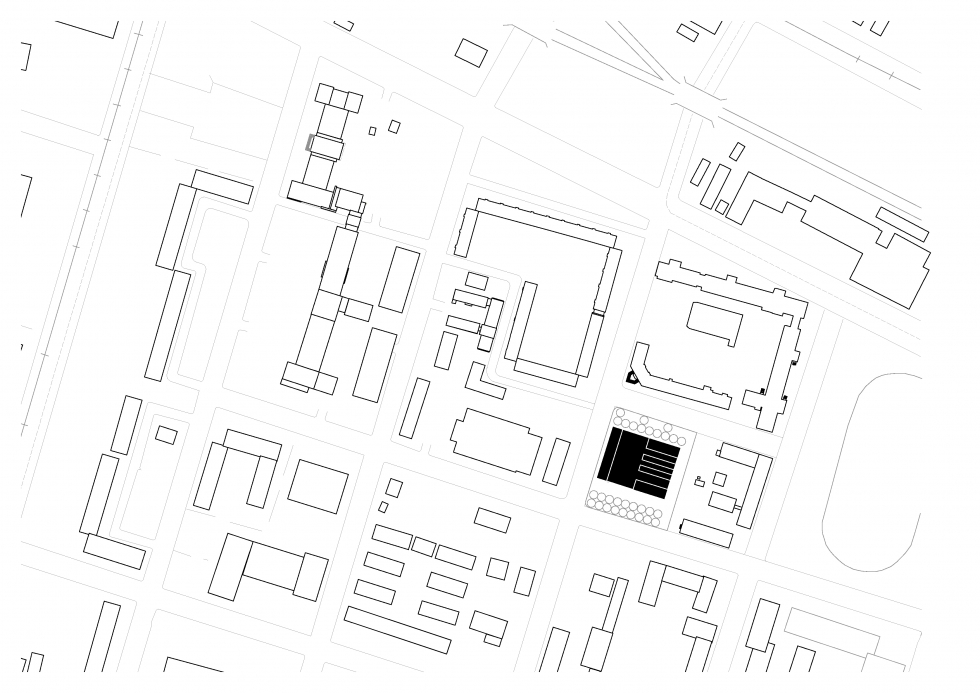
The design develops a clear, functional and identity-forming campus structure from the site’s topography and the complex spatial program. The natural change in elevation between the training yard to the south and the academic areas to the north becomes the organizing principle. From the north, the building appears as a two-story educational facility with generous glazing and timber upper floors, creating bright and welcoming learning environments.
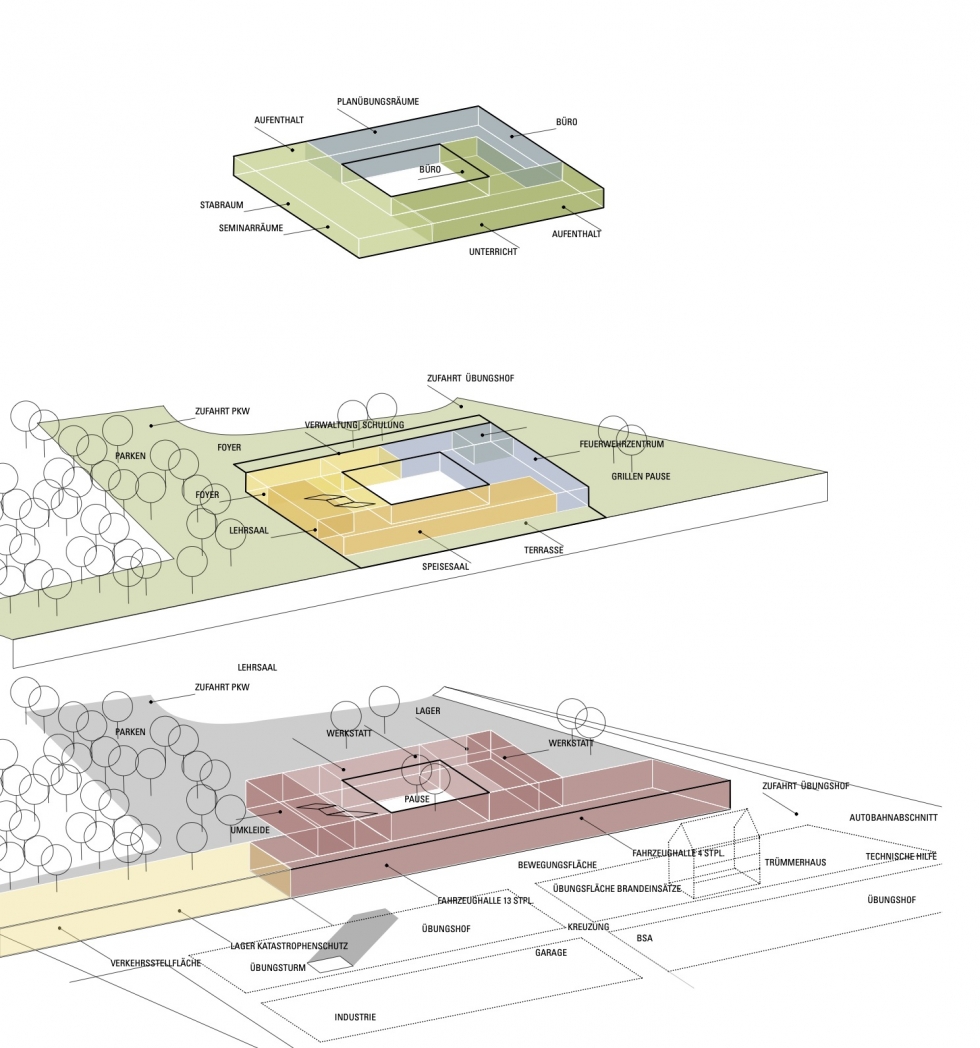
The vehicle halls positioned to the south form a robust and clearly defined edge to the training yard. Workshops, changing areas and training rooms are arranged compactly around courtyard-like spaces, enabling short distances between theory and practice. Catering and seminar rooms open onto a terrace overlooking the training grounds, strengthening the campus character.
The functional layout clearly separates the fire service center from the academic areas while creating synergies through shared seminar rooms and outdoor spaces. Training areas, vehicles and practice facilities are directly interconnected.
Structurally, the building combines a durable ground floor in recycled concrete with sustainable timber upper levels. Energy-efficient MEP systems, photovoltaic panels and rainwater management ensure resource-conscious operation. Compact design, clear circulation and differentiated material expression create a robust and future-oriented training facility.
The vehicle halls positioned to the south form a robust and clearly defined edge to the training yard. Workshops, changing areas and training rooms are arranged compactly around courtyard-like spaces, enabling short distances between theory and practice. Catering and seminar rooms open onto a terrace overlooking the training grounds, strengthening the campus character.
The functional layout clearly separates the fire service center from the academic areas while creating synergies through shared seminar rooms and outdoor spaces. Training areas, vehicles and practice facilities are directly interconnected.
Structurally, the building combines a durable ground floor in recycled concrete with sustainable timber upper levels. Energy-efficient MEP systems, photovoltaic panels and rainwater management ensure resource-conscious operation. Compact design, clear circulation and differentiated material expression create a robust and future-oriented training facility.
Realization Competition – Purchase Award